How to Treat Sustainable Campus Infrastructure as a Strategic Priority



University campuses are catalysts of innovation and discovery, the birthplace of world-changing ideas and creative solutions. Maintaining such an environment requires modern facilities that offer students and faculty the latest technology and research spaces, which require reliable energy and infrastructure. However, many campuses have aged, inefficient facilities that rely on fossil-fuel-based central utilities in addition to a lack of system redundancy and a backlog of deferred maintenance.
Many universities have committed to meet decarbonization goals by a specified date, creating an additional layer of urgency.
While there is no magic solution, institutions can meet these demands with long-term, integrated planning for infrastructure upgrades. Taking a wide view of these issues allows institutions to address the full scope of challenges, stakeholders, and solutions.
Energy Demand The energy pressures facing universities today are far greater than previous generations. While artificial intelligence, quantum computing, and other data-intensive research activities offer never-before-seen opportunities, they are also driving electricity consumption higher. Yet many institutions are trying to implement future-focused technology with infrastructure built for the past.
At the same time, the power grid is becoming less predictable. During intense storms or heat waves, utility companies have called for universities to curtail campus energy use to prevent grid failures, which highlights the importance of resilience and backup power generation.
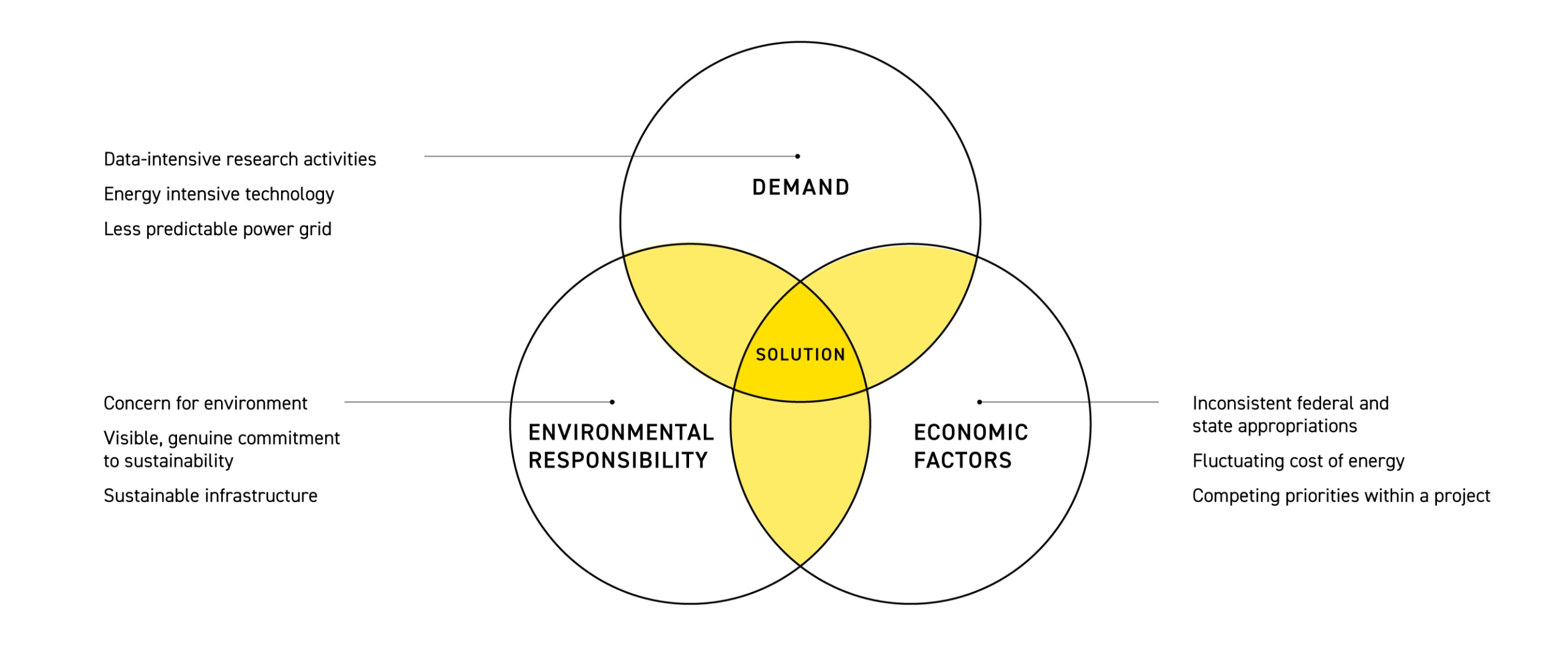
Further complicating matters, the cost of energy can fluctuate based on global events, and universities are now competing with commercial data centers for limited energy resources. For a school to invest in a new program, reliable electricity is a crucial requirement to power the required facilities, which directly impacts their ability to recruit top faculty and students.
Environmental Responsibility Admirably, most major universities, particularly large public and research institutions, have made a commitment to reduce carbon pollution. However, advanced sustainable technologies such as geothermal systems and next-generation electrification usually require longer procurement and construction timelines. When a new research building needs to be brought online quickly, decision-makers may opt for traditional, less efficient systems to meet urgent timelines. Lingering supply chain pressures and a shortage of experienced facilities staff only make the challenge more difficult.
Economic Factors Universities, especially public universities, depend heavily on federal and state appropriations, which can be inconsistent from year to year. Additionally, sustainable infrastructure is often not the driving force of projects. While some institutions have made net zero emissions a campus-wide priority, items such as utility plant improvements are often packaged with other large capital projects. As a result, progress tends to be incremental rather than transformational. Private institutions with robust endowments may be better positioned to make significant investments, but they too face competing priorities.
So how can universities achieve long-term transformational change?
Effective Advanced, Integrated Planning
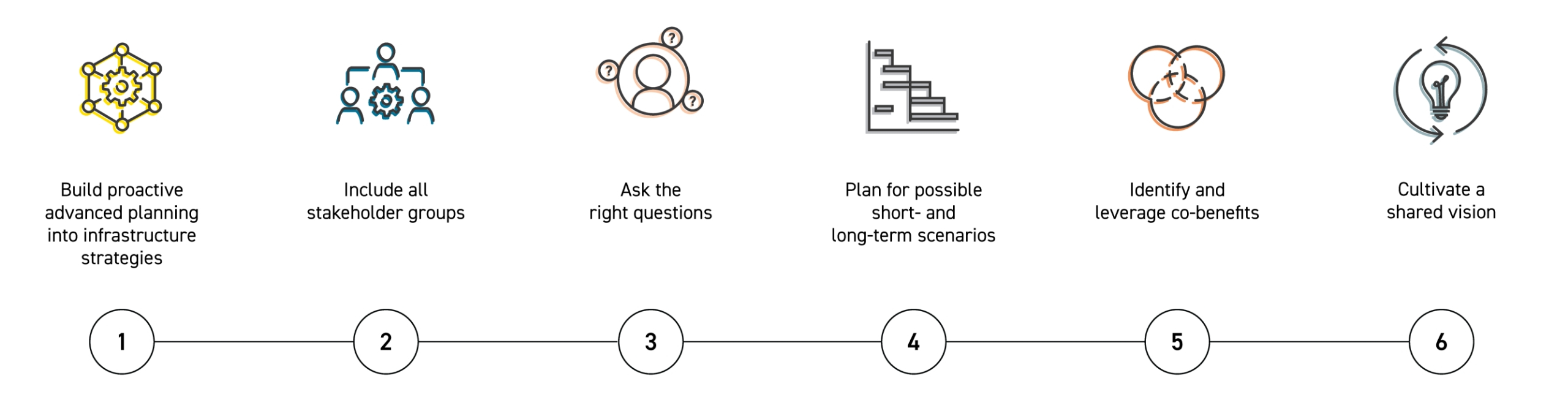
Build Proactive Advanced Planning into Infrastructure Strategies Preparing for an uncertain future requires flexibility. This is achieved through building proactive advanced planning into infrastructure strategies so that the uncertainty of today doesn't become a crisis tomorrow. We have worked with universities on long-term strategy planning to help them reach their goals and avoid competing with short-term priorities.
Include All Stakeholder Groups Institutions that have most effectively built and executed a shared vision are the ones that operate with holistic planning, as opposed to silos. These conversations should be integrated with all stakeholder groups, including deans, facilities, campus utilities and engineering, the sustainability team, campus planning, and the budget office so that plans are woven together. This requires a wider view of strategic planning and confirming that each area is communicating with one another. Getting everyone to the table allows for all needs to be considered.
Ask the Right Questions In order to consider all stakeholders' needs, you'll need to address tactical questions such as: How does an infrastructure strategy align with carbon neutrality goals? Which systems are most vulnerable to disruption or becoming obsolete, and what is the potential impact? It also requires addressing potential changes in conditions: What if the grid becomes less reliable? What if federal funding priorities shift? What if enrollment grows faster or slower than projected?
Plan for Possible Short- and Long-term Scenarios No one can say with certainty what the energy landscape will look in the future, but in our experience working with campus leaders across the country, the clients who are more resilient are the ones who have taken the time to plan through possible scenarios for the next 5, 10, 15 years, or more. This not only allows institutions to be in a better position to meet long-term goals but also makes them better prepared for unexpected events along the way. These conversations should integrate physical master planning with campus infrastructure planning and growth projection scenario planning.
Identify and Leverage Co-benefits Many infrastructure projects provide the opportunity to add additional benefits to the campus and achieve two or more goals at once. For example, on a recent project underground pipes needed to be replaced, which provided the opportunity for improvements to an aged plaza above the pipes, making the campus more beautiful and accessible. On the reverse side, infrastructure upgrades can often be bundled into a building project for less cost than if either were addressed as separate initiatives. Having all university stakeholders at the table for strategic planning allows everyone to more easily identify these opportunities and multiply their positive impact.
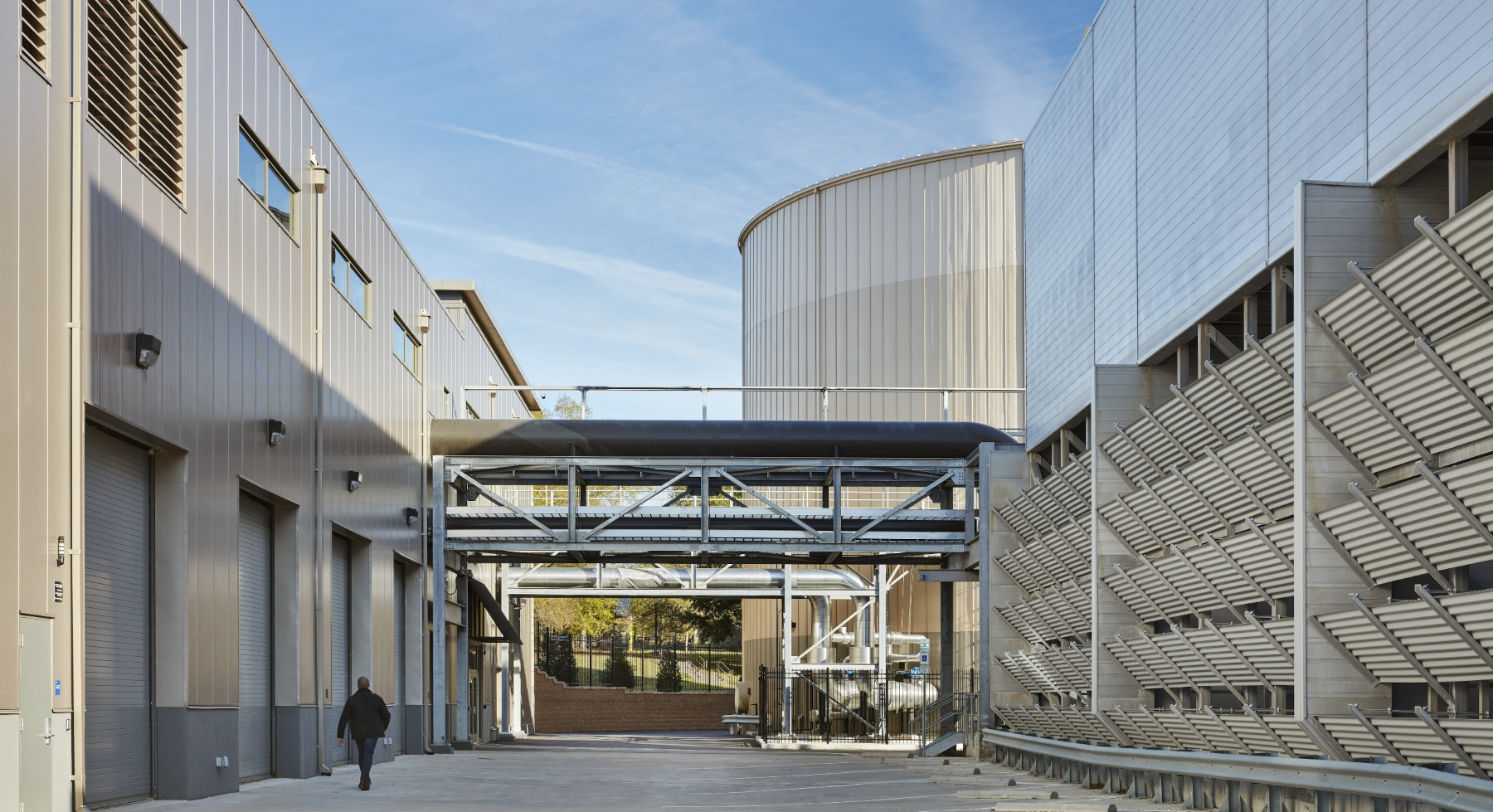
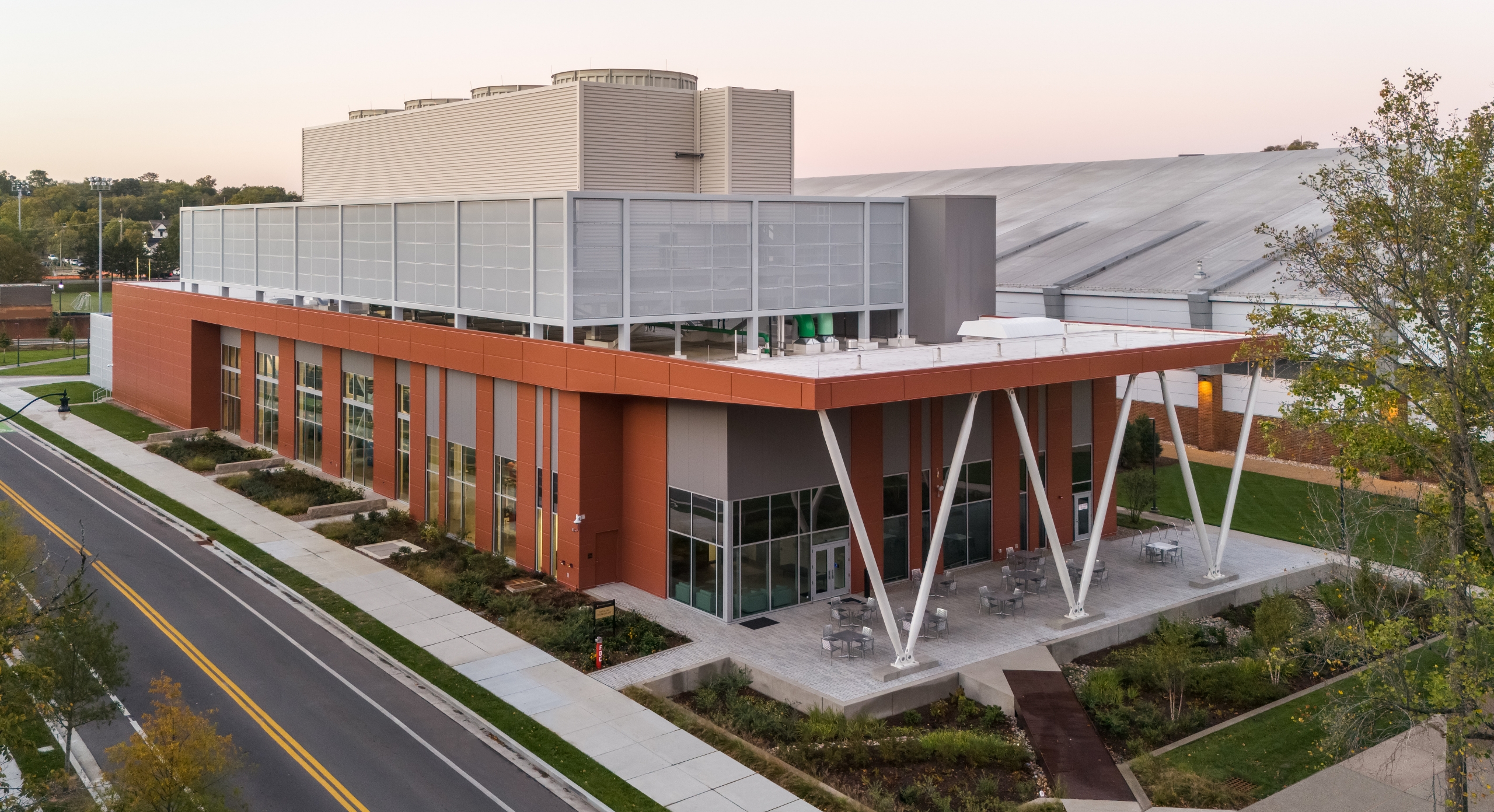
Cultivate a Shared Vision Implementing these long-term goals requires a shared vision and the collective will of more than just one project champion to see it through. Weaving the importance of sustainable infrastructure into the culture and even the curriculum of the university creates a unifying responsibility that can withstand temporary setbacks. This could be as simple as communicating to interested parties the tangible long-term benefits of a facilities project versus the risk of doing nothing. From a building design standpoint, this can mean highlighting utility projects and treating them as buildings that can add beauty to the campus. From site selection to engaging architectural and landscape design, a utilities facility should be planned and designed to fit within the context of a campus, not be hidden from it.
The pressures facing campus infrastructure today are real and growing. However, these challenges represent an opportunity for universities to create a model for sustainable, resilient, high-performing institutions in the 21st century and beyond. Many of the students studying in these buildings will go on to become decision-makers who shape the built environment of the future. What they learn and observe from these campuses will inform that work for decades. Tomorrow's successful universities will treat infrastructure as a strategic priority that is embedded into the culture of these campuses of discovery and innovation. That starts with holistic planning today.